“Cinéma Vérité: the art or technique of filming a motion picture so as to convey candid realism.”
– The Merriam-Webster Dictionary
It is possible you have checked out the IFC comedic series “Documentary Now.” If so, you may be aware of how each episode is a clever parody of an established documentary. Or…a documentary that has had some influence on filmmakers to come. And yet, it is also possible you may have a latent knowledge of who they are and the role they’ve played in the history of cinéma vérité. So here, in no discernable order, are the pioneers who have developed techniques still used to this day.
1. The Maysles Brothers

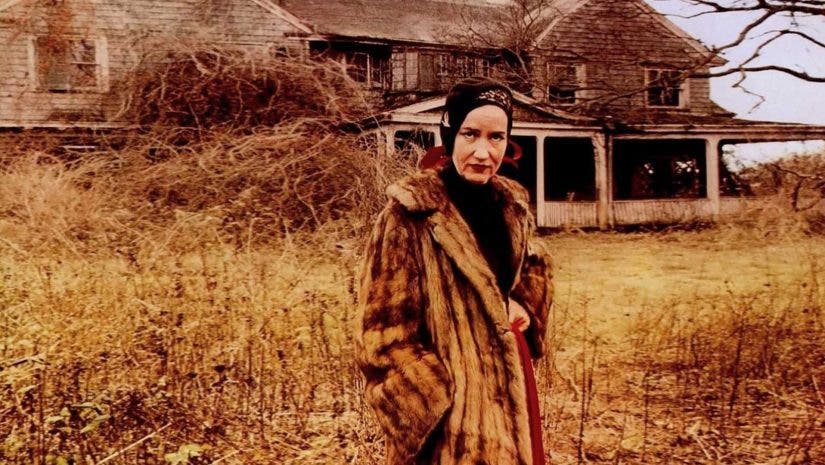
Proud members of the “direct cinema” movement, the Maysles began their career shooting two documentaries behind the Iron Curtain. Albert and David were a one-two punch; Albert would work the camera while David recorded the sound. Together they redefined the approach to documentary filmmaking. Whether it involved following the door-to-door activities of a “Salesman” or capturing a traumatic event in what was supposed to be a concert film (the galvanizing “Gimmie Shelter” which is about the notorious Rolling Stones concert at Altamont), the Maysles had an uncanny track record for being at the right place at the right time. As a testament to their role as influencers, their New England gothic “Grey Gardens” is not just a legendary documentary in its own right but has inspired both a Broadway musical and HBO film starring Jessica Lange and Drew Barrymore.
2. Errol Morrishttps://www.youtube.com/watch?v=Mnlq0TurT3c
After completing his first documentary “Gates of Heaven,” Morris failed to get funding for numerous projects until he finally met Dr. James Grigson, a psychologist whose court testimonies led to many death sentence convictions. Believing that “Dr. Death” should be his next subject, Morris then decided to point his lens at the case of Randall Dale Adams, a man who was facing execution due to a legal technicality. The result was the compelling “The Thin Blue Line.” Morris’ film (and approach) engendered a whole generation of investigative filmmaking. His technique of combining talking head interviews with dramatic reenactments influenced almost every true crime reality series on TV.
Here’s an amusing bit of trivia: famed German auteur Werner Herzog (himself the subject of “Burden of Dreams” and a respected documentarian in his own right) was skeptical that Morris would complete anything. Once “Gates of Heaven” enjoyed a theatrical release, Herzog made good on his promise to eat his shoe. And he did. And it was recorded for prosperity as a short film titled “Werner Herzog Eats His Shoe.”
3. Marcel Ophuls

In 1933, Marcel Ophuls and his family left his native Germany and settled in France. Although he started off as a feature filmmaker, it wasn’t until 1969 did he utilize his background in television news reporting by directing “The Sorry and the Pity.” An examination of the collaboration between the Vichy government and Nazi Germany during World War II, its influence cannot be denied, especially in the way it depicts the psychological effect war has on a single populace. It still remains as one of the most affecting peaks into wartime anti-Semitism and was nominated for an Academy Award in 1971. It has also been immortalized as Woody Allen’s obsession in the award winning “Annie Hall.”
4. Michael Moore
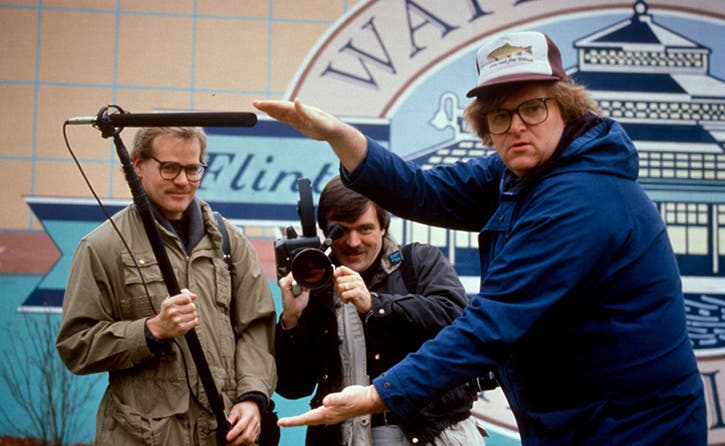
Former Mother Jones editor Michael Moore should be credited with introducing “gonzo journalism” into documentary filmmaking. For some his films err too much on the side of agitprop, but Moore’s insistence on interacting with his subjects on camera has provided some very amusing moments indeed. Born in Flint, Michigan Moore was fired from his Editor-In-Chief position. He then sued his former employer and used the settlement money to fund “Roger & Me.” A personal, sometimes satirical peek into the harsh economic climate of his hometown, it established an approach that would later appear in other filmmaker’s work like Morgan Spurlock’s “Supersize Me” and Bill Maher’s “Religulous.”
5. Ondi Timonerhttps://www.youtube.com/watch?v=_XSTwfdFwIY
While Ondi Timoner represents a younger generation of documentarian than those featured on this list, she deserves respect for two reasons. 1) she is the rare female working within a male dominated genre and 2) her ability to capture truth on camera, not to mention jaw dropping, real-life behavior on the part of her subjects almost acts as a harbinger for the reality TV programming yet to come. In fact, “We Live in Public” utterly predicted our future fascination with online content. Predating YouTube celebrity culture by only a few years, Timoner’s documentary focuses on one man’s attempt to launch an internet television network during the 1990s. It would offer a flagship series covering 100 individuals living together in a single space. Thanks to the constant surveillance of digital cameras, audiences were invited to view this experiment online twenty-four hours and seven days a week.
Although Timoner’s documentary was completed in 2009, it was her recognition and anticipation of the access of future media that insures her place as a principal influencer when it comes to documentary filmmaking. In fact, Timoner has started her own web network called “A Total Disruption” which features interactive, “cyber series” profiling modern innovators and thought leaders.
6. Frederick Wiseman

Boston born, former lawyer Frederick Wiseman was creating “observational films” around the same time that the Maysles and Pennebaker were shooting “direct cinema.” Although he has shunned the term cinéma vérité (he felt that to capture truth on camera one had to be purely objective in approach. And there is no way a filmmaker can be that objective), no filmmaker has been so connected to the movement. Although he spends a lot of time researching his subjects, most of the creative work goes into his editing. He followed his first film (the narrative feature “The Cool World”) with 1967’s “Titicut Follies,” a profile of the Bridgewater State Hospital. It exposed the ugly conditions its patients were forced to deal with and is an early example of just letting the camera “tell it like it is.” The movie was so controversial; the Massachusetts government successfully blocked its release. It wasn’t until 1991 when a Superior Court Judge allowed the film to be seen by the mass public.
Pennebaker began his career as an experimental filmmaker and would later co-found Drew Associates with documentarian Richard Leacock and journalist Robert Drew. It was a cooperative that would include Albert and David Maysles among its members. But it was Pennebaker’s “Don’t Look Back” that introduced a new sub-genre of documentary filmmaking: the candid coverage of a popular celebrity. The film offers up revealing, behind the scenes moments during Bob Dylan’s 1965 concert tour in England. As an extra bonus, “Don’t Look Back” also includes the now famous “music video” of Dylan dropping placards to his “Subterranean Love Sick Blues.”
8. Robert J. Flattery
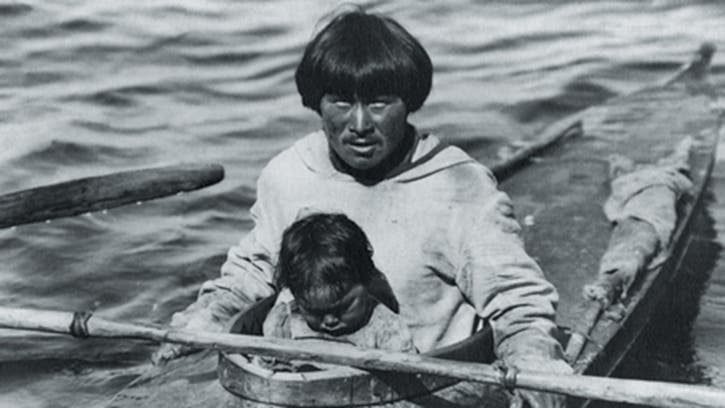
Robert J. Flattery was a writer who had made numerous trips to the American north while attempting to ingratiate himself within the Inuit communities. After securing funds from a French fur trade company, Flattery used the money to finance “Nanook of the North,” the earliest example of feature documentary filmmaking. Although “documentary” might be a loose term in this case as Flattery actually cast locals in key roles while staging some scenes for the benefit of his camera. However, “Nanook” was a huge success in 1922 thus ushering in a whole new genre.
9. Michael Aptedhttps://www.youtube.com/watch?v=f-U6RfKVzCs
In 1964, a UK television program titled “World in Action” aired what would be the first of a succession of documentaries profiling various subjects as they progressed from the age of seven through fifty-six. What resulted might be the most compelling reality series ever made. For almost five decades, audiences witnessed the growth of fourteen personalities representing the unique class differences prevalent in Britain at the time. Michael Apted himself would direct some high profile projects like “Gorillas in the Mist” and the James Bond adventure “The World is Not Enough.” But he continued to return the project that started way back in the mid ‘60s. Although it began as a segment for an hourly, television news magazine, the “Up” series would move on to feature length status and, ultimately, be released theatrically. Although “Seven Up,” “7 Plus Seven,” “21 Up,” et al., could be distinguished as the blueprint for the reality serial, it’s approach is anything but exploitive. And is often pointed to as the gold standard of the genre.
10. Ken Burnshttps://www.youtube.com/watch?list=PL706BA6BC60A82105&v=FN2huQB-DmE
Our last filmmaker is so influential; he has inspired many apps and post-production plug-ins promoting the “Ken Burns style.” Usually this encapsulates a combination of photo montage and motion design. But since 1990’s “The Civil War,” Ken Burns’ name became synonymous as a brand. Making use of archival footage and imagery, voice over narration and, yes, incorporating motion into still photography is a signature component in Burn’s work. His visually dramatic approach has been co-opted by many documentary filmmakers since.
 Contemporary Development